AnSo Anaesthesia Sonoanatomy
- 2.5
- Rating
- 50.00K
- Installs
- Free
- Price
 Analysis by App-foxy
I approached AnSo Anaesthesia Sonoanatomy as a focused medical reference rather than a general learning app. Developed by Sumo Enterprises, it is aimed at people who use ultrasound in anaesthesia and want a compact way to think through sonoanatomy away from a full textbook or a live teaching session. That narrow purpose is both its appeal and its biggest limitation: it can support a specific clinical workflow, but it is not a replacement for supervised training, clinical judgement, or a complete ultrasound course.
The app is free to install and is suitable for Everyone, although the subject matter is clearly intended for healthcare learners and professionals. It has passed fifty thousand installs and holds an average rating of two and a half from roughly five hundred ratings, with several dozen written reviews. I would treat that mixed reception as a reason to test it personally rather than assume it will suit every learner. The current version is 2.3.7, and it runs on Android 7.0 or later. Optional purchases range from under a dollar to several dollars per item, so the basic entry cost is low while some content may sit behind separate purchases.
How the app feels in current use
My first impression is that AnSo works best when I already have a question in mind. If I am revising a regional anaesthesia technique, preparing for a teaching discussion, or trying to connect a nerve block with the structures visible on ultrasound, a dedicated sonoanatomy resource is more useful than searching through broad medical websites. The subject is presented as a practical reference area, not as a general anatomy encyclopedia, which keeps the experience relevant for its intended audience.
You May Also Like

 Blood Strike: 2.5 Anniversary
Blood Strike’s Loadouts Turn Every Drop Into a Tactical Gamble
A close look at Blood Strike’s custom loadouts: how fast access to signature weapons reshapes its battle royale rhythm, rewards preparation, and narrows the gap between fights.

 Pandora - Music & Podcasts
Pandora’s Music Is Easy to Start, but Harder to Recover
Pandora’s strength is its low-effort path from a seed to a station. Its weak spot is how much confidence it asks you to place in connection, setup, and quiet recovery.

 8 Ball Pool
 Is Built on Rivalries, Rematches, and Routine
A close look at the rivalries, rematches, shared routines, and unanswered safety questions that turn a quick pool match into a persistent mobile community.

 Samsung Music
’s Quiet Strength Is Playing What You Already Own
Its reach comes less from spectacle than from dependable access to a personal library. That simplicity is both the app’s strongest retention engine and its ceiling.

 AccuWeather: Weather Radar
AccuWeather Review: A Quick, Clear Forecast for Everyday Decisions
For everyday plans, the best forecast is the one you can understand quickly. AccuWeather makes rain timing, radar, and local conditions easy to act on, with a few trade-offs.

 Hill Climb Racing
Why Hill Climb Racing Still Turns Crashes Into One More Run
A tiny car, a bumpy hill and one more upgrade: Hill Climb Racing keeps resurfacing because its simple chaos makes every near-miss feel personal.
More From Our News Desk
View All News


That focus also means the app is not especially useful as a casual medical learning tool. Someone looking for basic anatomy, a broad introduction to ultrasound physics, or a complete guide to safe needle handling may find the scope too specialised. I would not recommend opening it as a substitute for a formal course if the user has never handled an ultrasound probe. The app can help organise knowledge, but it cannot recreate the tactile and visual decisions involved in scanning a real patient.
In everyday use, I would keep it available for short revision sessions rather than expect it to carry a long study period. A realistic scenario would be a trainee reviewing the anatomy relevant to a planned block before a teaching list, then using the app afterward to revisit which structures were identified and which were difficult to distinguish. That makes it more valuable as a prompt for reflection than as a stand-alone authority.
A useful companion for targeted revision
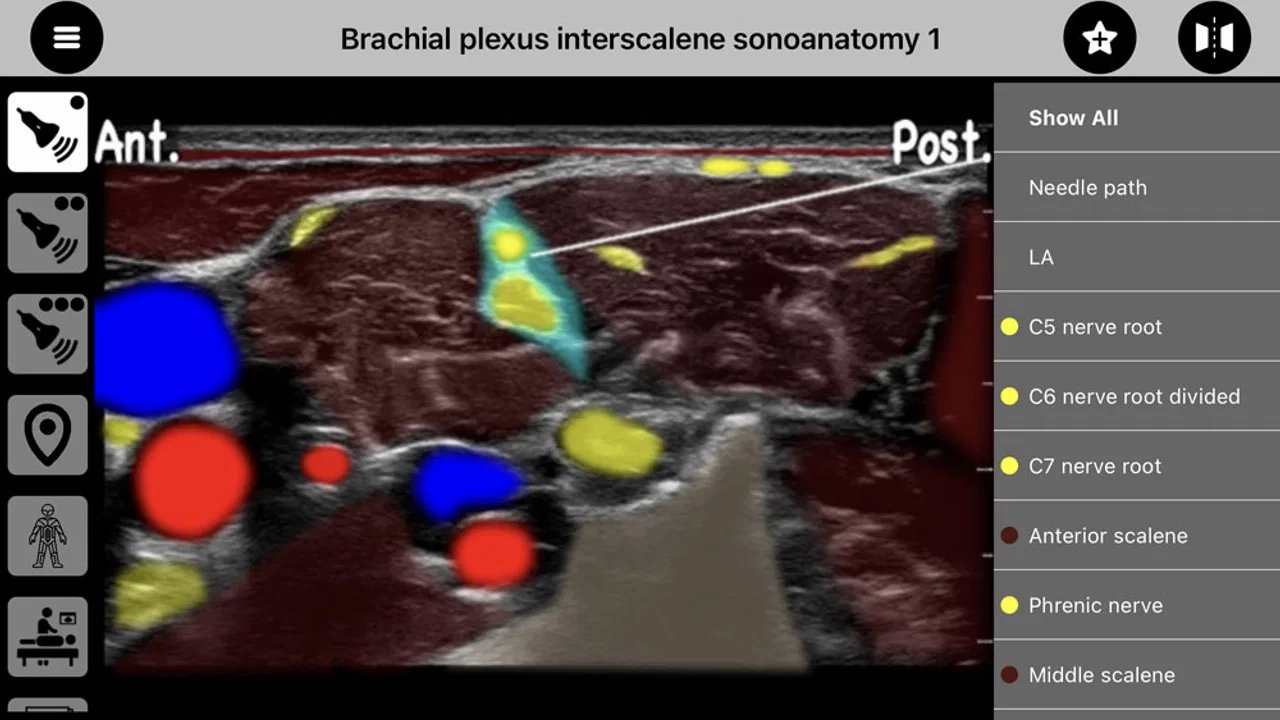
The strongest reason to use this app is its subject-specific focus. General anatomy applications often provide beautifully labelled illustrations, but they may not help much when the real challenge is translating those structures into an ultrasound view. AnSo is designed around that connection. For a learner who already understands the broad anatomy, a focused reference can reduce the time spent filtering irrelevant material.
I also like the possibility of using it before and after scanning rather than only during revision. Before a session, I would use it to identify the structures I expect to find and to remind myself of the relationships that matter. Afterward, I would compare that mental picture with what appeared on the screen. This workflow encourages active recall: instead of simply reading labels, I would try to predict the image and then check my understanding.
That approach reveals an important trade-off. A reference app can make preparation more efficient, but it can also create false confidence if I recognise a diagram without being able to reproduce the scan. The most useful habit is to close the app before scanning and explain the anatomy in my own words. If I cannot describe the expected layers, neighbouring vessels, and likely sources of confusion, I have probably memorised the screen rather than learned the anatomy.
What the current release tells me
The current release, 2.3.7, shows that the product has continued beyond its original launch in January 2018. That matters for existing users because a maintained version is generally preferable to an abandoned reference, particularly on a subject where device compatibility and content presentation affect usability. Still, a version number alone does not prove that every topic has been substantially expanded, so I would judge the app by the material I actually need rather than by the update label.
For someone returning after an earlier installation, the practical question is whether the present build opens reliably on the device and whether the relevant content remains accessible. The minimum operating-system requirement of Android 7.0 keeps it available to many older Android devices, which may be helpful for users who keep a dedicated phone or tablet in a clinical study area. On the other hand, users with very old hardware should not assume that a low software requirement guarantees a smooth experience; screen size, image clarity, and storage can still affect how comfortable a visual reference feels.
I would also keep the optional purchase model in mind when planning to use it as a long-term reference. The app is free at the starting point, but individual purchases may change how much material is available without payment. That is not automatically a problem, yet it makes the initial exploration important. I would first confirm that the free portion matches my learning goals before spending money on additional items. This is especially sensible for students who may only need one narrow area for a particular rotation.
How it fits into an existing learning system
AnSo is most effective when it sits beside, rather than replaces, other resources. A textbook or structured course gives the broader anatomy, indications, complications, and clinical context. A supervised scan provides the physical skill. The app can occupy the middle ground: it helps connect the conceptual anatomy to the ultrasound view. That division of labour is more realistic than expecting one mobile reference to cover every part of anaesthesia education.
Compared with a general anatomy app, this one should be more immediately relevant to ultrasound-guided anaesthesia. Compared with a video course, it is likely to be easier to consult for a quick reminder, but less capable of demonstrating probe movement, dynamic scanning, or the variations that become obvious when watching an experienced operator. Compared with a printed atlas, it is more portable, though the phone format may be less comfortable for detailed image study than a larger book or tablet.
I would not use it as the sole source for deciding whether a procedure is appropriate for a particular patient. A sonoanatomy reference can support recognition of structures, but patient-specific decisions also involve history, examination, anticoagulation considerations, local protocols, equipment, and supervision. The app belongs in preparation and education, not in the role of an independent clinical decision-maker.
Where it helps, where it slows me down, and what to expect next
I use a focused medical reference most effectively when I decide in advance what I need from it, and this section looks at how that approach can make AnSo more useful without expecting it to do the work of a course or a supervised scan. I’ll also weigh the practical friction of revisiting a niche resource over time. That leads naturally to the question of what a household or shared device can—and cannot—add to the experience.
Changes that matter to returning users
The move from the original 2018 release to version 2.3.7 suggests a product that has undergone ongoing revision rather than remaining frozen. For an existing user, the main benefit of staying current is continuity: the app remains aligned with a modern Android environment while preserving its narrow identity as an ultrasound resource for anaesthesia. I would update before an important teaching session, not because an update guarantees new educational material, but because using the current build reduces the chance of discovering compatibility trouble at the wrong time.
At the same time, I would avoid interpreting the current version as evidence that every weakness has been solved. The public rating of two and a half indicates that a meaningful number of users have found the experience less than ideal. Ratings do not explain each person’s problem, so I would look at the app’s behaviour on my own device and pay attention to navigation, image readability, and access to the sections I need. A specialised app can be educationally sound and still frustrating if its presentation does not match the user’s workflow.
For new users, the evolution is less important than the current fit. The app has enough reach to be recognised beyond a small private project, with more than fifty thousand installations, but reach should not be confused with completeness. I would consider it a niche tool with an established user base, not a universal standard for anaesthesia education.
Three habits that make the reference more useful
First, I would use it as a prediction exercise. Before opening a relevant topic, I would sketch or describe the expected ultrasound image from memory. Then I would compare that prediction with the app’s presentation. This exposes gaps that passive reading hides, especially when I know the anatomical names but cannot place them spatially.
Second, I would pair each review with a question about image quality. Instead of only asking “What structure is this?”, I would ask what could make it harder to identify: depth, anisotropy, shadowing, nearby vessels, or an unusual patient habitus. The app cannot replace real scanning variation, but this questioning habit prevents its images from becoming rigid templates in my mind.
Third, I would create a small pre-scan checklist based on the areas I repeatedly forget. I might note the structures I expect, the orientation I want to confirm, and the features that would make me pause. I would keep that checklist separate from the app and use the app only to refresh the underlying anatomy. This turns a passive reference into a repeatable preparation workflow.
A fourth useful trade-off concerns screen size. On a phone, portability wins, but fine anatomical relationships may be harder to inspect. If I were studying detailed images, I would prefer a larger compatible screen and good brightness. If I were moving between wards or teaching rooms, the phone would be more convenient. The right choice depends less on the app itself than on whether the display lets me distinguish the visual information comfortably.
Who should use it and who should skip it
I would recommend trying AnSo to anaesthesia trainees, clinicians developing ultrasound skills, and educators who want a focused prompt for discussions about sonoanatomy. It may also suit an experienced user who wants a portable refresher before teaching or revisiting a technique. The free starting point makes experimentation relatively easy, while the optional purchases mean users can decide whether the expanded material justifies further spending.
I would advise beginners to use it only alongside instruction. If the learner does not yet know how to position the probe, adjust the image, maintain sterility, or recognise when the scan is misleading, a visual reference could be misunderstood. The app may show what a structure should look like, but it cannot tell the user whether the current image is safe to interpret or whether the probe position is producing an inadequate view.
I would also skip it if I wanted a broad medical app covering multiple specialties. Its value comes from being specific. Someone searching for medication information, diagnostic calculators, patient education, or a general anatomy atlas would be better served by a different category of tool. Likewise, a user who expects an interactive simulation or a full video-based course may find the format too limited.
Practical questions before installing
Can it be used without paying? Yes, the app is free to install, but optional in-app purchases cost between forty-nine cents and six dollars forty-nine per item. I would explore the available material first and treat any purchase as an addition to a learning plan, not an automatic requirement.
Will it run on an older Android device? It supports Android 7.0 and later, so many older devices are eligible. Even so, I would check whether the screen is large and sharp enough for detailed ultrasound-oriented images. Eligibility is not the same as comfort, particularly when the app is used for close visual comparison.
Is it suitable for patients or the general public? It carries an Everyone age rating, but that describes access rather than clinical audience. The terminology and purpose are aimed at people studying or practising anaesthesia. A patient looking for an explanation of an upcoming procedure would probably find a plain-language resource more helpful.
Can it replace a textbook, instructor, or supervised scan? In my view, no. It is best used to reinforce anatomy and prepare questions. The moment the issue involves patient-specific risk, uncertain anatomy, or procedural safety, I would rely on appropriate clinical guidance and direct supervision rather than a mobile reference.
What I would watch in future use
The most important thing for me is whether future development keeps improving the connection between static reference material and real scanning decisions. More content alone would not necessarily make the app better. Clear organisation, readable images, dependable access to purchased material, and explanations that acknowledge anatomical variation would have more practical value than simply adding more labels.
I would also watch how well the app serves both new and returning users. Beginners need context and warnings against overconfidence, while experienced users need fast navigation and precise reminders. Balancing those needs is difficult, and a narrow medical app should not become cluttered just to appear comprehensive. The best direction would preserve the focused workflow while making it easier to move from a question to a useful answer.
My final view is cautiously positive. AnSo Anaesthesia Sonoanatomy is a specialised companion for ultrasound-focused anaesthesia learning, and that makes it more relevant than a generic anatomy tool for the right audience. Its free entry point, broad device compatibility, and continued version history are practical advantages. The modest average rating and purchase structure are reasons to test it carefully rather than commit immediately. Use it to prepare, question, and revise—not to replace hands-on training or clinical judgement. For me, that is the clearest way to get value from it while keeping its limitations in perspective.
FAQs for AnSo Anaesthesia Sonoanatomy
01What is AnSo Anaesthesia Sonoanatomy used for?
AnSo Anaesthesia Sonoanatomy is an educational reference app designed to help anaesthesia professionals and trainees study ultrasound anatomy relevant to regional anaesthesia and nerve blocks. It presents sonoanatomy examples, anatomical structures, and related guidance in a mobile format, making it useful for revision before clinical practice. It should support learning, not replace supervised training, institutional protocols, or professional clinical judgment.
02Who can benefit from using AnSo Anaesthesia Sonoanatomy?
The app is primarily aimed at anaesthetists, anaesthesia residents, regional anaesthesia fellows, and healthcare professionals learning point-of-care ultrasound. Medical students with an interest in ultrasound-guided procedures may also find it helpful, although some terminology and clinical concepts may be more suitable for users with an existing medical background. Beginners should use it alongside textbooks, courses, and hands-on instruction.
03Does the app teach me how to perform ultrasound-guided nerve blocks?
AnSo Anaesthesia Sonoanatomy can improve your understanding of the anatomy and ultrasound appearances associated with anaesthetic procedures, but it should not be treated as a complete practical training course. Safe scanning and nerve-block performance require supervised teaching, knowledge of indications and contraindications, equipment experience, sterile technique, and the ability to manage complications. Use the app as a visual study aid rather than as a standalone procedural guide.
04Can AnSo Anaesthesia Sonoanatomy be used as a clinical decision-making tool?
The app may be useful for reviewing anatomical relationships and refreshing knowledge before a procedure, but it is not a substitute for current clinical guidelines, local policies, drug information, or advice from a qualified specialist. Ultrasound images and anatomy can vary between patients, and clinical decisions must account for individual factors, equipment, operator skill, and procedural risks. Always verify important information through authoritative medical sources.
05Is AnSo Anaesthesia Sonoanatomy suitable for offline study and everyday revision?
The app is intended to provide convenient mobile access to anaesthesia-related sonoanatomy material, which can make it practical for short revision sessions, teaching discussions, or preparation before ultrasound practice. Offline availability and the exact access to all content can depend on the app version and device platform, so check the store listing before downloading. Users should also review update information to ensure the educational material remains current.
Pros
- Clear sonoanatomy references for regional anesthesia planning.
- Useful visual guidance for identifying nerves and surrounding structures.
- Supports quick revision before procedures or clinical training.
- Focused content avoids distractions from unrelated medical topics.
- Helpful companion for learners building ultrasound anatomy knowledge.
Cons
- Primarily educational and should not replace supervised practical training.
- Some content may require prior knowledge of anatomy and anesthesia.
- Coverage may not include every block technique or patient variation.
- Clinical recommendations can become outdated as techniques evolve.
- The app’s usefulness depends on access to a compatible mobile device.

AnSo Anaesthesia Sonoanatomy
Gallery